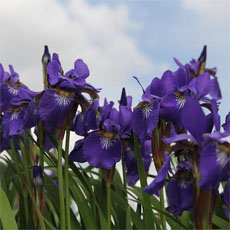
Tall Bearded Iris 'Stellar Lights'

Iris

Family
Iridaceae (eye-rid-AY-see-ee)
Genus
Iris (EYE-ris)
Synonym
Spacing
24-36 in. (60-90 cm)
36-48 in. (90-120 cm)
Hardiness
12-15 in. (30-38 cm)
15-18 in. (38-45 cm)
Sun Exposure
USDA Zone 3a: to -39.9 °C (-40 °F)
USDA Zone 3b: to -37.2 °C (-35 °F)
USDA Zone 4a: to -34.4 °C (-30 °F)
USDA Zone 4b: to -31.6 °C (-25 °F)
USDA Zone 5a: to -28.8 °C (-20 °F)
USDA Zone 5b: to -26.1 °C (-15 °F)
USDA Zone 6a: to -23.3 °C (-10 °F)
USDA Zone 6b: to -20.5 °C (-5 °F)
USDA Zone 7a: to -17.7 °C (0 °F)
USDA Zone 7b: to -14.9 °C (5 °F)
USDA Zone 8a: to -12.2 °C (10 °F)
USDA Zone 8b: to -9.4 °C (15 °F)
Danger
Full Sun
Bloom Color
Parts of plant are poisonous if ingested
Foliage
Blue-Violet
White/Near White
Class
N/A: plant does not set seed, flowers are sterile, or plants will not come true from seed
Bloom Time
Sun Exposure
Hardiness
Bloom Color
Bloom Time
Bloom Time
Bloom Color
Bloom Time
Bloom Time
Bloom Color
Bloom Color
Bloom Time
Other Details
Other details
Propagation Methods
Herbaceous
Seed Collecting
Soil pH requirements
By dividing rhizomes, tubers, corms or bulbs (including offsets)
Patent Information
Awards (if applicable)
Foliage Color
Bloom Characteristics
Water Requirements
Where to Grow
Seed Collecting
6.1 to 6.5 (mildly acidic)
6.6 to 7.5 (neutral)
7.6 to 7.8 (mildly alkaline)
Fruit Shape
Fruit Size
Fruit Colors
Growing Habit
Days to Maturity
Seed Type
Disease Resistance
Leaf Type
Foliage Color
Bloom Characteristics
Water Requirements
Where to Grow
Other details
Propagation Methods
Soil pH requirements
Patent Information
Plant Size (check one)
Growing Habit
Growth Rate
Leaf Shape
Leaf Appearance
Degree to which the appearance is present
Leaf Texture (top)
Leaf Texture (bottom)
Leaf Color
Color of Leaf Margin
Leaf Substance
Number of Vein Pairs
Appearance of Margin
Margin Width
Flower Shape
Flower Fragrance
Does it set seed?
Flower Size
Flower Type
Blooming Habit
Foliage Habit
Color Patterns
Awards (if applicable)
Tall Bearded (TB)
Seed Type
Growth Habit
Days to Maturity
Awards (if applicable)
Bloom Shape
Other Details
Pruning Instructions
Kernel Color
Flower Shape
Flower Habit
Bloom Size
Color Pattern
Bloom Shape
Pruning Groups
Bloom Diameter
Heat (Pungency)
Fruit Shape
Fruit Size
Fruit Color
Disease Resistance
Seed Type
Flower Size
Size/Type
Flower Characteristics
Leaf Shape/Type
Leaf Texture
Leaf Color
Midseason (M)
Late Midseason (MLa)
Reblooming (Re)
Propagation
Honorable Mention
Pollination
Bearing Habit
Rootstock Vigor
Disease Resistance
Fruit Usage
Flowers are good for cutting
This plant is attractive to bees, butterflies and/or birds
Classification
Average Water Needs; Water regularly; do not overwater
Regional

This plant is said to grow outdoors in the following regions:

Houston, Alabama

Phoenix, Arizona

COARSEGOLD, California

Yosemite Lakes, California

Lutz, Florida

Wichita, Kansas

Anacoco, Louisiana

Ellicott City, Maryland

Preston, Maryland

Florence, Mississippi

Robertsville, Missouri

Las Cruces, New Mexico

Lawton, Oklahoma

Grants Pass, Oregon

Muscoda, Wisconsin

show all

Featured Videos

Gardener's Notes:

3
positives
1
neutral
0
negative
Sort By:
Sort By:
J
J
Marble Hill, NY (Zone 6a) | May 2011 | positive

I bought this from a Texan supplier and it took 2 years for it to acclimatize to my garden and bloom, but it was worth the wait!! Blooms...Read More

G
Grants Pass, OR (Zone 8a) | January 2007 | positive

I lovingly call this iris a weed because it multiplies like crazy wherever I put it in my yard.

J
J
Belfield, ND (Zone 4a) | December 2005 | neutral

Awards: American Iris Society Honorable Mention '88

M
Lutz, FL (Zone 9b) | June 2005 | positive

I got this as a free bonus gift with another bulb purchase, and it has turned me into an Iris lover. I planted it in the fall, around No...Read More

Featured
Figure-Eight Sallow moth
(Psaphida resumens)
Arctic Redpoll
(Acanthis hornemanni)
Featured
Figure-Eight Sallow moth
(Psaphida resumens)
Arctic Redpoll
(Acanthis hornemanni)