I love this plant. Mine is purple/lavender and brings a lot of color to the garden where I have planted it in really well drained soil in...Read More full sun exposure. I irrigate it with drip 3 days a week and may pull the drip from it completely after it is two years old (they're currently only one year old). I didn't realize it could get up to 10' and will need to prune it back a lot if that is the height/width it is headed. I planted two of them in the Spring of 2016 in Aptos, California, where we have sunny Springs, foggy Summers, hot, sunny Autumns and dry, warm Winters if we're in a drought. At the moment the plant is flourishing since the last 30 days has been sunny and warm.
A. hake...Read Moreifolia is normally an upright, much-branched, rapidly growing small to medium shrub reaching to 3 m (10'). The leaves are dark green, glabrous, comprised of very narrow linear segments, 5-10 cm (2-4") x 0.1-0.2 cm ( to 1/8"). The individual lobes of the leaves make the foliage 'needle-like'.
The plant produces an abundance of blooms each season.
The plant blooms from November until March. The blooms are 5-6 cm (1"-2 1/2") long, tubular in shape, not opening widely and they usually have a dark red central spot. The capsule is 1.8-2 cm (3/4") x 1.2 cm (1/2") and is 5-celled.
It is a desert shrub which occurs in South Australia and in the southern part of West Australia.
As A.hakeifolia is a desert plant, it is well suited to a warm, dry climate. It is intolerant of bad drainage but is adaptable and sufficiently hardy in cool moist climates such as south-eastern Australia. A well-drained sunny spot is ideal although plants will grow in semi-shade. Plants perform best when they receive sunlight for most of the day and have some wind protection as large plants are subject to wind damage.
The plant may develop into a well-shaped shrub without any need for pruning but it can be pruned to improve the shape if desired.
A. hakeifolia tolerates mild frosts but some protection may be required from heavier frosts.
Battle Ground, WA (Zone 8b) | November 2013 | positive
We saw this plant at a nursery in Carmel Valley, Ca, and my wife just had to have it. Except for the flowers, it doesn't look like a mem...Read Moreber of the Mallow family, but it is. Some research on the internet indicates that folks in Australia and Tasmania have found it to tolerate frosts down to -5C (23F), hence Zone 9.
Flowers are creamy yellow and tulip-shaped, with a red inner part and a "spinner" pattern at the inside base. Individual flowers last 2-3 days. The plant is an upright, airy bush with needle-like leaves. My research shows that it needs a low-phosphorus diet and little to no watering (it's a desert plant in its native habitat), so treat it basically the same as a Protea. I'll be watching mine with interest to see how it copes with our upcoming rainy season.


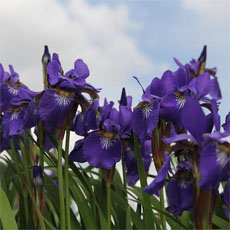

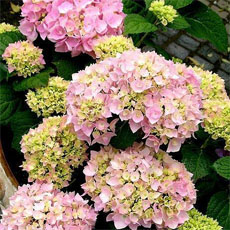
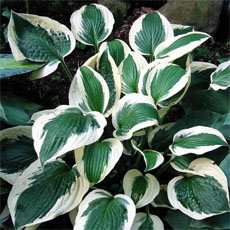



I love this plant. Mine is purple/lavender and brings a lot of color to the garden where I have planted it in really well drained soil in...Read More
Alyogyne hakeifolia - yellow
Alyogyne hakeifolia - purple
Alyogyne hakeifolia - pink/mauve
A. hake...Read More
We saw this plant at a nursery in Carmel Valley, Ca, and my wife just had to have it. Except for the flowers, it doesn't look like a mem...Read More