A perennial plant from Europe, Russia and parts of Northern Africa.
Has rosettes of slightly hairy, mid-deep green, oblong...Read More-ovate basal leaves. Bears clustered heads of tiny, blueish lilac flowers very rarely pink or white. Each flower head is of a single sex, the female being slightly smaller than the male.
Flowers July-October
Loves clay or peaty, slightly fertile, acid to alkaline soils in sun or light shade. It requires the soil to be moist at least half of the year if not all the time (it flowers much better in damp soils).
Incredbily useful for nectar seeking insects and has a faint honey scent.
The plant has a number of common names but the most well known is Devil's Bit. This name comes from the legend that the Devil found the plant growing and was so envious of it's usefulness to man as a herb, he bit off part of the root in an attempt to stem it's growth. It didn't work and the plant freely spreads where happy, the root (not suprisingly considering the legend) is short, thick and ends abruptly.
The plant was used as a cure all in the past. Today you may find various concotions of Devil's Bit for the treatment of mild fevers and to purify the blood. It was and is still used to help treat various skin problems including acne, persistant sores and dandruff.
A superb plant for a wildflower garden, it copes very well with mowing (except when flowering!) but won't stand too much in the way of tall grass competition (which I know to my detriment)


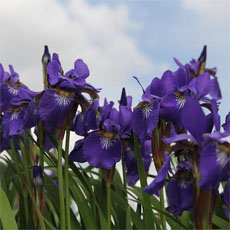



Undemanding, blue flowers in Sept/Oct in my zn. 5 garden
Invasive plants are also mentioned on the USDA website and based on its distribution, this plant is most likely NOT native.
According to the USDA's Plants Database, this plant is also native to the U.S. growing in Massachusetts and Rhode Island.
A perennial plant from Europe, Russia and parts of Northern Africa.
Has rosettes of slightly hairy, mid-deep green, oblong...Read More