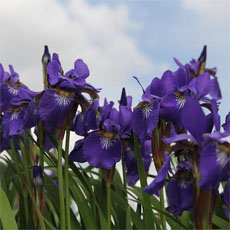
Aconitum Species, Japanese Monkshood

Aconitumjaponicum

Family
Ranunculaceae (ra-nun-kew-LAY-see-ee)
Genus
Aconitum (a-kon-EYE-tum)
Species
japonicum (juh-PON-ih-kum)
Synonym
Aconitum deflexum
Sun Exposure
Light Shade
Partial to Full Shade
Foliage
Deciduous
Herbaceous
Smooth
Height
36-48 in. (90-120 cm)
Spacing
12-15 in. (30-38 cm)
15-18 in. (38-45 cm)
Hardiness
USDA Zone 4a: to -34.4 °C (-30 °F)
USDA Zone 4b: to -31.6 °C (-25 °F)
USDA Zone 5a: to -28.8 °C (-20 °F)
USDA Zone 5b: to -26.1 °C (-15 °F)
USDA Zone 6a: to -23.3 °C (-10 °F)
USDA Zone 6b: to -20.5 °C (-5 °F)
USDA Zone 7a: to -17.7 °C (0 °F)
USDA Zone 7b: to -14.9 °C (5 °F)
USDA Zone 8a: to -12.2 °C (10 °F)
USDA Zone 8b: to -9.4 °C (15 °F)
Danger
All parts of plant are poisonous if ingested
Handling plant may cause skin irritation or allergic reaction
Bloom Color
Dark Blue
Medium Blue
Blue-Violet
Bloom Time
Late Summer/Early Fall
Mid Fall
Other Details
Category
Perennials
Water Requirements
Requires consistently moist soil; do not let dry out between waterings
Foliage Color
Where to Grow
Bloom Characteristics
Bloom Size
Other details
Soil pH requirements
5.1 to 5.5 (strongly acidic)
5.6 to 6.0 (acidic)
6.1 to 6.5 (mildly acidic)
Patent Information
Non-patented
Propagation Methods
By dividing the rootball
From seed; direct sow outdoors in fall
From seed; winter sow in vented containers, coldframe or unheated greenhouse
From seed; stratify if sowing indoors
Seed Collecting
Allow pods to dry on plant; break open to collect seeds
Regional

This plant is said to grow outdoors in the following regions:

Bridgewater, Massachusetts

Portland, Oregon

Featured Videos

Gardener's Notes:

0
positive
1
neutral
0
negative
Sort By:
Sort By:
V
(Zone 8a) | October 2006 | neutral

The Japanese name is Yama-tori-kabuto and it grows in the hills and mountains of Japan.

Featured
American Tent Caterpillar
(Malacosoma americanum)
Spiny-cheeked Honeyeater
(Acanthagenys rufogularis)
Featured
American Tent Caterpillar
(Malacosoma americanum)
Spiny-cheeked Honeyeater
(Acanthagenys rufogularis)